

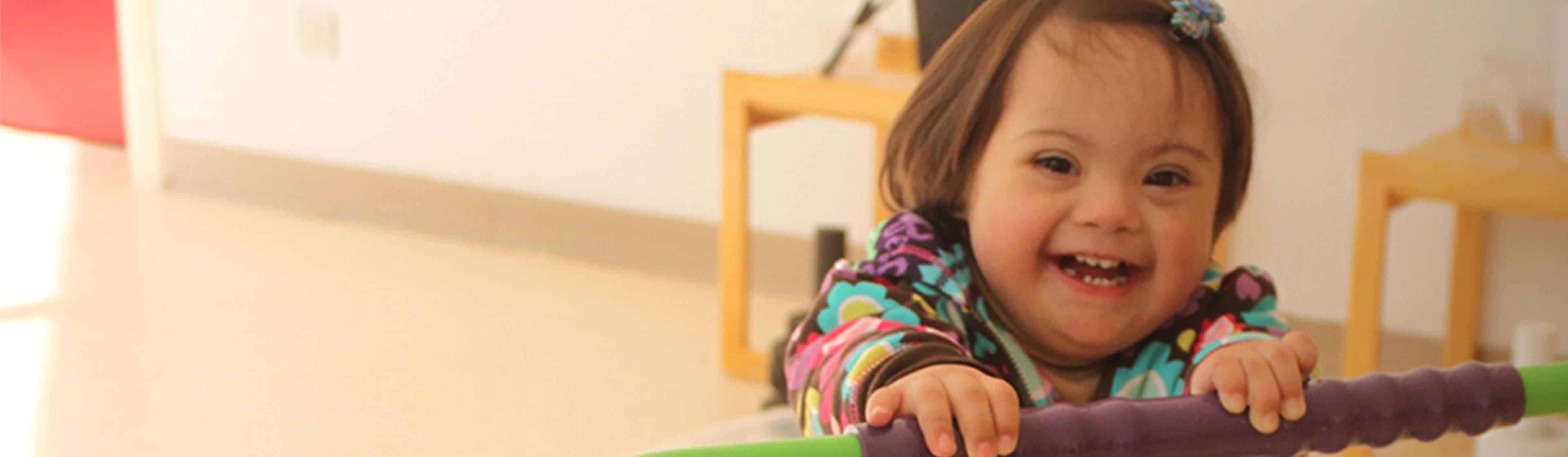
Ear, nose and throat (ENT) problems are common among people with Down syndrome. It is important for primary care physicians and caregivers to be aware of these issues, as most of them persist throughout a person's life. The ENT specialist plays a vital role in the health of people with Down syndrome, particularly as ENT problems are closely linked to physical, emotional and educational development.
What Are the Common ENT Problems in Children with Down Syndrome?
Narrow Ear Canal
Narrowing of the ear canal may affect approximately 40–50% of children with Down syndrome. This narrowing can make it difficult to diagnose middle ear diseases. Cleaning of the ear canal by an ENT specialist is often necessary to ensure proper examination and diagnosis. However, the ear canal grows with age and may no longer be a concern after the age of three. If a child with Down syndrome has a narrow ear canal, they should visit an ENT specialist every three months to avoid, diagnose and treat any ear infections appropriately.
Chronic Ear Infections
Children with Down syndrome are more susceptible to upper respiratory tract infections, which predisposes them to chronic ear infections. The facial structure associated with Down syndrome also increases their risk of chronic ear disease.
The middle ear is ventilated through the Eustachian tube, a small channel connecting the middle ear cavity to the nasopharynx. Upper respiratory tract infections or allergies can cause the Eustachian tube to swell, trapping bacteria and leading to ear infections. Additionally, reduced muscle tone — common in people with Down syndrome — affects the opening and closing of the Eustachian tube, which can lead to negative pressure build-up in the ear cavity, resulting in fluid accumulation and recurrent infections.
Chronic Eustachian tube dysfunction persists for longer in children with Down syndrome than in the general population, so regular monitoring of both ears is essential. Some children may need pressure-equalising tubes inserted repeatedly to resolve chronic infections. Monitoring and treatment are particularly important given the high rates of under-diagnosis and under-treatment of ear infections in children with Down syndrome.
Hearing Loss
The American Academy of Pediatrics and the Down Syndrome Medical Interest Group recommend hearing tests at birth and then every six months until the age of three, or until the child is able to cooperate for a full audiological evaluation including ear-specific tests (more frequently if hearing loss is present). After the age of three, children with Down syndrome should have annual hearing assessments. The need for hearing aids should be considered even in cases of mild hearing loss, to prevent delays in educational, emotional and language development.
Adults with Down syndrome also face a significant risk of conductive hearing loss and may frequently experience impacted ear wax, which can further impair their hearing. Routine ear examinations can assess for impacted wax, and regular audiological follow-up can formally evaluate the degree of hearing loss. Undiagnosed hearing loss is often misinterpreted by those around the person as stubbornness, confusion or disorientation in adults with Down syndrome. However, once correctly identified, significant improvement can be achieved through hearing aids, ear cleaning and environmental modifications.
Airway Obstruction and Sleep Apnoea
Airway obstruction is common in children with Down syndrome, with some studies suggesting that almost all children with Down syndrome experience some form of sleep-related obstruction. Poor sleep due to sleep apnoea and disrupted restful sleep from sleep-disordered breathing can lead to excessive daytime sleepiness and difficulties with fine motor skills.
Obstructive sleep apnoea occurs when the airway becomes blocked during sleep. This can result from a small upper airway, enlarged adenoids and tonsils, obesity, relaxation of the airway due to low laryngeal muscle tone, and increased secretions — all of which are characteristic features of Down syndrome. Obstruction may also occur due to glossoptosis, a condition in which the relatively large tongue falls back into the narrow airway during sleep.
When sleep apnoea is suspected, a thorough clinical examination, X-ray imaging and a comprehensive sleep study should be performed. Airway obstruction can be managed medically or surgically, and both approaches may sometimes be necessary. Medical options include saline spray to prevent obstruction and continuous positive airway pressure (CPAP) therapy during sleep; weight loss may also help address sleep apnoea. Surgically, tonsillectomy and adenoidectomy represent the first line of treatment for airway obstruction and sleep apnoea in children with Down syndrome. If complete resolution is not achieved, further evaluation and treatment may be required.
Chronic Rhinitis and Sinusitis
Due to the facial anatomy associated with Down syndrome and the way the immune system matures, children with Down syndrome are prone to chronic rhinitis (inflammation of the nasal mucosa with mucous discharge) and sinusitis (inflammation of the sinus linings). Treatment includes saline drops or spray to keep the narrow nasal passages clear, along with antihistamines and nasal steroid spray. These conditions are expected to improve with age and can generally be managed by a primary care physician.
If sinusitis fails to resolve with medical management, surgical adenoid removal and/or endoscopic sinus surgery may be necessary.
Source: Information in this section has been reproduced under an exclusive arrangement with the National Down Syndrome Society (NDSS). Available at: www.ndss.org