

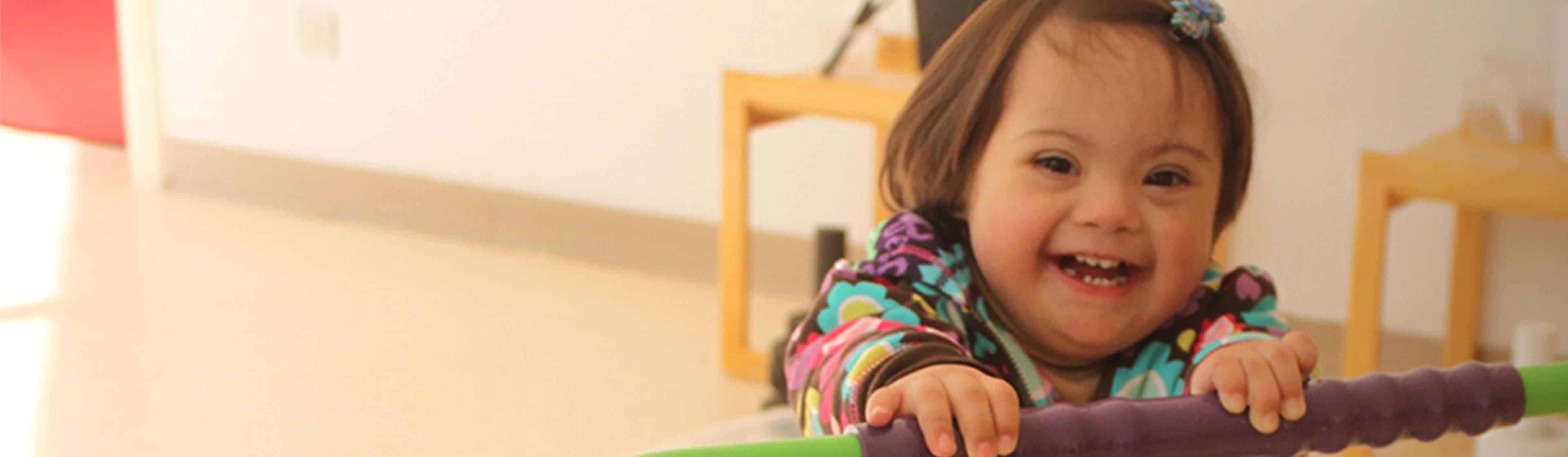
Down syndrome can affect the eyes during their development and may impair normal visual development. Eye conditions are reported in more than half of people with Down syndrome, ranging from minor issues such as tear duct abnormalities to sight-threatening diagnoses such as early-onset cataracts. Special attention to eye health is therefore essential for people with Down syndrome.
What Is Different About the Eyes of People with Down Syndrome?
The eyes of people with Down syndrome have some distinctive characteristics, including upward-slanting eyelids, prominent skin folds between the eye and the nose, and small white spots on the iris known as Brushfield spots. These spots are harmless and can also be seen in people without Down syndrome.
Do Most Children with Down Syndrome Need Glasses?
Refractive errors (meaning the need for glasses) are more common in children with Down syndrome than in other children. These may include hyperopia (long-sightedness), astigmatism, and myopia (short-sightedness). Poor accommodation may also be present, and if detected, bifocal glasses should be prescribed.
What Are the More Common, Less Serious Eye Abnormalities in Down Syndrome?
Many children with Down syndrome experience tear duct abnormalities, seen as persistent watering and discharge from the eyes, which worsens with colds. Regular massage of the lacrimal sac area two to three times daily is recommended. If the condition persists beyond the first year of life, surgical probing of the tear ducts may be necessary.
Strabismus (misalignment of the eyes) is also more common in Down syndrome. It is often subtle and may be difficult for a paediatrician to detect. It is important to diagnose strabismus during childhood, as it can lead to amblyopia (lazy eye) and loss of stereoscopic vision.
How Is Strabismus Treated?
In some cases, glasses alone are sufficient to correct the eyes. If strabismus persists despite appropriate glasses, eye muscle surgery may be necessary. This procedure takes one to two hours and can often be performed as a day case. People with Down syndrome are more likely to need more than one operation to align their eyes.
What Are the Most Serious Eye Problems That Can Occur?
The most concerning condition is congenital cataracts (clouding of the lens of the eye). If present early in a young child, the eye cannot provide the brain with a clear image, and the brain can never truly learn to see. This is deprivation amblyopia. Significant cataracts must be removed very early in life to prevent permanent visual impairment. Any person with Down syndrome, regardless of age, should have a full eye examination if they show a decline in cognitive functioning or a change in their usual activities.
Are There Eye Conditions in Down Syndrome That Can Cause Vision Loss?
Amblyopia can result from strabismus, severe ptosis, cataracts, or uncorrected refractive errors. Rarer problems affecting the optic nerve or retina can sometimes cause vision loss and are generally not treatable. Nystagmus (rhythmic oscillation of the eyes) may also occur.
What Are the Medical Recommendations for Eye Monitoring in Children with Down Syndrome?
A red reflex assessment at birth is recommended to screen for cataracts and evaluate for strabismus or nystagmus. A child with Down syndrome should have their first specialist eye examination before the age of six months, then see an eye specialist every one to two years even if asymptomatic. More frequent visits are needed if eye problems are detected.
What Signs Suggest a Child May Have an Eye Problem?
Children with Down syndrome rarely complain about eye problems. Signs to look out for include: a squint or closing of one eye, an unusual head tilt, wandering eye movements, and sensitivity to light. A general decline in functional performance may also indicate a visual problem. Ptosis appears as a drooping eyelid, and a blocked tear duct causes daily watering and discharge.
Source: Information in this section has been reproduced under an exclusive arrangement with the National Down Syndrome Society (NDSS). Available at: www.ndss.org