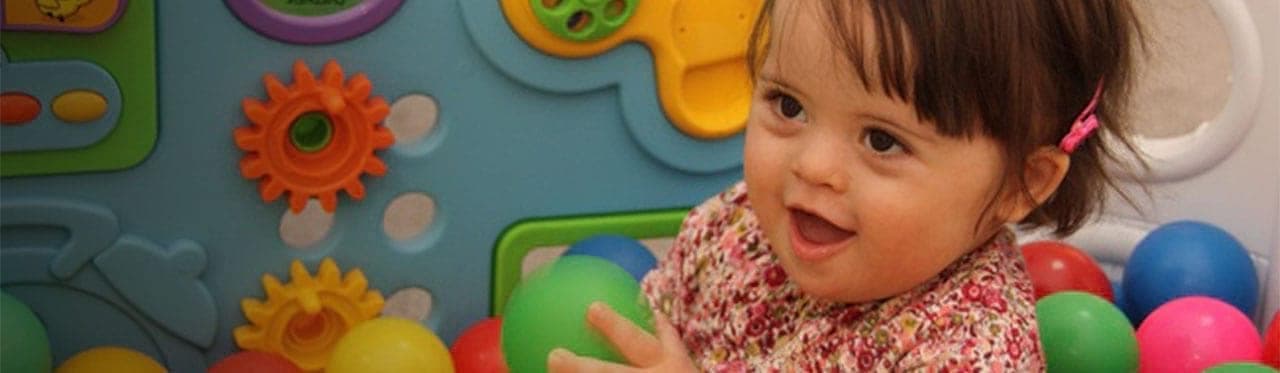
Raising awareness in society contributes to viewing people with Down syndrome as individuals first, with the same feelings and needs as everyone else.
Before Birth
Before birth, there are two types of tests for Down syndrome that can be performed during pregnancy: screening tests and diagnostic tests. Screening tests provide estimates of the likelihood of a fetus having Down syndrome, while diagnostic tests provide accurate, confirmed results with 100% certainty.
- Prenatal Screening: Most screening tests include a blood test and an ultrasound. Blood tests (serum screening) measure the amounts of various substances in the mother's blood, and these tests are used in combination with the mother's age to estimate the chances of having a baby with Down syndrome. These tests are often accompanied by an ultrasound to check for certain characteristics that researchers believe are significantly associated with Down syndrome. Researchers have recently developed a combination of tests — including maternal serum analysis, ultrasound, and the mother's age — that can yield highly accurate results in the early stages of pregnancy. Nevertheless, early screening tests do not provide a definitive diagnosis of Down syndrome. These tests are now routinely performed for women of all ages, and if their results indicate a high likelihood of Down syndrome, doctors advise the mother to undergo diagnostic testing for a more specific diagnosis.
- Diagnostic Tests: The diagnostic procedures available before birth include chorionic villus sampling and amniocentesis. These procedures carry a 1% risk of causing spontaneous termination of pregnancy (miscarriage), but are 100% accurate in diagnosing Down syndrome. Amniocentesis is performed in the second trimester, after 15 weeks of pregnancy, while chorionic villus sampling is performed in the first trimester, between weeks 9 and 11.
At Birth
Down syndrome is usually identified at birth based on certain visible physical features, such as general muscle hypotonia (low muscle tone), a single deep crease across the centre of the palm, a flattened face, and upward slanting eyes. Since these features can also appear in other children, a test known as a "karyotype" is performed to confirm the diagnosis. To obtain the karyotype, the doctor takes a blood sample to examine the baby's cells, then uses special tools to photograph the chromosomes and arrange them by size, number, and shape. Through this analysis, doctors can diagnose Down syndrome. There is another genetic test called fluorescence in situ hybridisation (FISH), which operates on the same principle and confirms the diagnosis in a shorter time.
Source: The information in this article has been reproduced under an exclusive agreement with the National Down Syndrome Society. Available at: ndss.org